





What to Eat at Night to Lose Weight Without Sleep Hunger
Eating at night is one of the biggest challenges for people trying to lose weight. Many believe they must stop eating after 6 PM, while others assume that eating late automatically leads to fat gain. The truth is simpler: what matters is what you eat and how it affects hunger, digestion, and sleep. Choosing the right evening meal helps the body burn fat overnight instead of storing it, keeps you free from late-night cravings, and improves the quality of sleep.
Why Eating the Right Food at Night Helps With Weight Loss
The body continues to burn calories even while sleeping. It regulates hormones, repairs muscles, and stabilizes blood sugar. If your last meal of the day is heavy, full of sugar, or too fatty, digestion slows down and the body keeps energy stored. If dinner is light, balanced, and protein-rich, metabolism works more efficiently and hunger disappears naturally. A controlled evening meal also reduces emotional eating, which often appears when people feel tired or stressed.
Ideal Night Meals for Weight Loss
The best night meals are those that are easy to digest but still satisfying. When dinner includes protein and vegetables, the body feels full without feeling heavy. Moroccan cuisine offers many options that follow this principle.
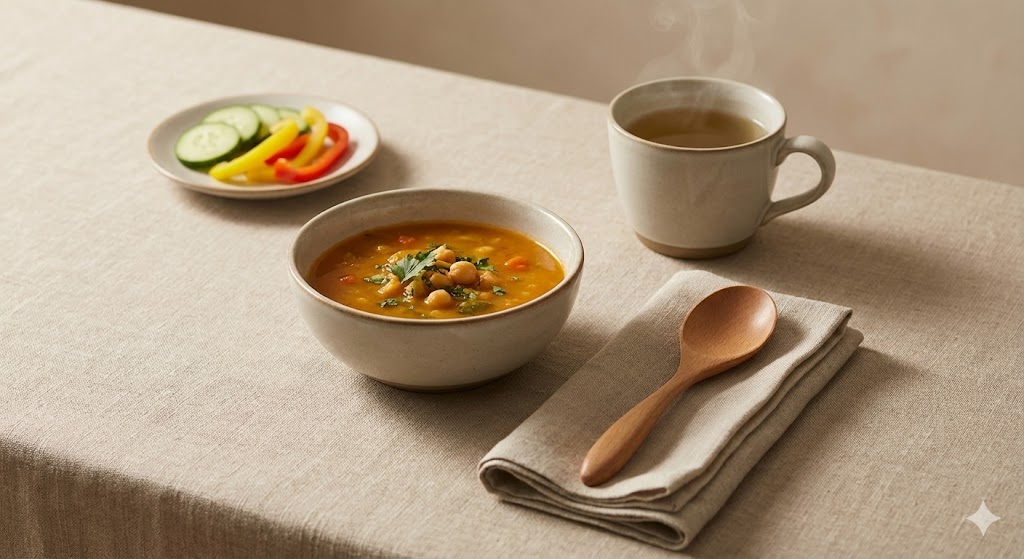
Moroccan Vegetable Soup With Olive Oil Drizzle
A warm vegetable soup is one of the best evening meals because it helps digestion, hydrates the body, and gives volume without high calories. When vegetables like zucchini, carrots, and pumpkin are blended, they keep the stomach comfortable and calm. A small drizzle of olive oil is enough to enrich the soup and support fullness. This meal helps you fall asleep easily and prevents waking up hungry at night.
Protein-Based Dinners to Avoid Late-Night Snacking
Proteins digest more slowly than bread or pasta, which keeps hunger suppressed longer. Two boiled eggs with cooked vegetables, grilled chicken pieces, or lentil-based dishes work very well at night. When protein is eaten at dinner, it reduces cravings for sugary snacks before bed. It also supports muscle recovery and helps maintain metabolism.
Yogurt Bowl With Fruit and Cinnamon
A light yogurt bowl can replace heavy desserts in the evening. Greek yogurt stabilizes blood sugar, prevents sudden hunger spikes, and provides calcium which helps with nighttime muscle repair. Adding apple slices, banana slices, or a small piece of date introduces natural sweetness without causing overeating. Cinnamon helps reduce appetite by slowing sugar absorption.
Small Portion of Whole Wheat Bread With Cheese or Eggs
Bread is not the problem; the portion is. A small slice of whole-grain bread with soft cheese or a boiled egg becomes a structured dinner that keeps hunger stable until morning. The presence of protein and fiber prevents overeating and keeps energy balanced for sleep.
Light Couscous or Rice With Vegetables
Traditional couscous can be eaten at night if prepared lightly. When couscous is steamed, served with vegetables, and eaten without sugary sauces or large amounts of oil, it fits into a balanced diet. The key is quantity control and increasing the vegetable part of the plate. The body receives volume and taste without excess calories.
Why Heavy Dinners Create Night-Time Hunger
Heavy dinners often contain refined carbs, fried foods, or sugary drinks. These meals raise blood sugar quickly, then make it drop fast, which triggers hunger again. Eating bread, fried msemen, sweet tea, or fast food at night confuses hunger signals and increases fat storage. The body then spends more time digesting and less time recovering.
What to Avoid Right Before Sleep
Sweet beverages, milkshakes, sugary yogurt, and large bread portions delay digestion. Eating spicy or salty food late at night also triggers thirst and affects sleep quality. When digestion is slow, the body feels heavy, sleep becomes shallow, and morning appetite increases. Avoiding these foods at night helps maintain hormonal balance and reduces emotional eating.
A Smart Rule to Follow at Night
The ideal evening rule is simple: choose meals that keep you full without exhausting digestion. Light soups, eggs, yogurt, vegetables, lentils, and whole grains are all effective choices for losing weight while maintaining satisfaction. Going to sleep with a relaxed stomach creates better rest, deeper sleep, and faster results in weight loss.
Healthy eating at night is not about restriction; it is about choosing intelligently. When dinner is light and balanced, the body works better overnight, reduces stored fat, and wakes up refreshed. By adopting a nighttime routine centered on protein, vegetables, and small portions of carbohydrates, weight loss becomes easier, peaceful, and sustainable.
Leave a Reply